Vermont Wildlife Patrol filed a report with the Vermont Fish & Wildlife Department’s law enforcement division on January 2, 2025 after reading a published report by a Milton trapper admitting and advising other trappers to drown skunks caught in live-traps.
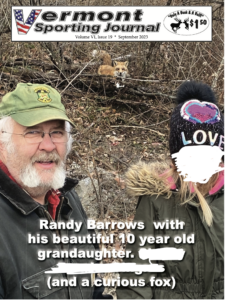
In the November-December 2025 issue of the Vermont Sporting Journal’s column, “Trapline Talk” Randy Barrows writes,
The easiest way to captue (sic) them is with a hav-a-heart trap. Skunks are normally a a real- ly calm critter until you piss in their porridge, then look out. I always carry an old blanket with me to hold between me and the skunk. Cheap insurance. I talk to them softly, cover them up and put them in the truck for a ride to the boat launch and swimming lessons. Shooting them anywhere in the body is met with a discharge. Seldom do they spray while drowning them…”
Randy Barrows also has taught trapper education courses for the Vermont Fish & Wildlife Department (VFW) and is a past president of the Vermont Trapper’s Association which inducted him into their Hall of Fame in 2024. On January 1, 2024 new trapping rules went into effect for legal methods of dispatch for trapped animals in Vermont. According to VFW’s website, “Dispatch of a live, trapped furbearer shall immediately be done with a muzzleloader or gun fired at arm’s length; or a bow and arrow, or crossbow; or a carbon dioxide chamber.” As one of VFW’s volunteer trapper education instructors, Barrows is responsible for teaching rule changes to new Vermont trappers.
In another VT Sporting Journal article published in the March-April 2025 issue, Barrows shares his dissatisfaction with the new trapping rules saying, “The fall of 2024 he (another trapper) was unsure if he was going to trap with the fur prices and becoming compliant with all the new BS rules handed down to trappers.”
On January 5, 2025, VFW warden Nathan Lumsden informed Vermont Wildlife Patrol that the investigation had determined that Barrows carried out his skunk trapping activities as a commercial nuisance trapper, outside of the recreational land trapping season that runs from late October to December 31. According to Vermont statute 10 V.S.A. § 4828, such trapping done in defense of property is exempted from the new furbearer regulations and allows for any means of killing of trapped wild animals. Lumsden said the article was a “gross oversight” as the target audience of the Nov.-Dec. Vermont Sporting Journal was recreational, not nuisance trappers. He said Barrows’ report would be corrected.
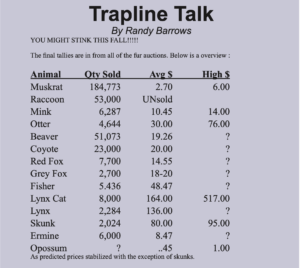
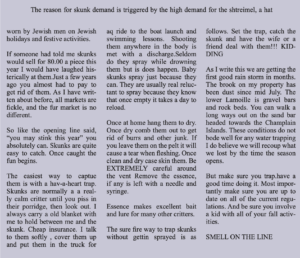
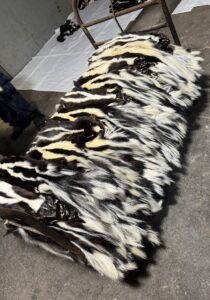
Market demand for skunk tails for the making of Hasidic Jewish hats has driven prices for skunk as high as $80.00 according to Barrows’ report and international fur market reports for 2025. “High fur prices for public trust wildlife should not justify inhumane trapping practices. Drowning is an act of animal cruelty and should not be a legal way to take Vermont wildlife whether in July or November. What good are our new trapping rules if they don’t apply to all trapping?” says Rod Coronado, the investigator reporting the incident to VFW.
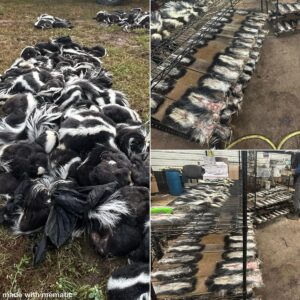
What is most disconcerting about Barrows cruel story-telling is that not a single Vermont trapper or reader of the Vermont Sporting Journal raised concern that his instructions were being given at the beginning of Vermont’s regulated trapping season when drowning of trapped animals is prohibited. It speaks to a culture of acceptance for the cruelty that often accompanies our state’s trapping practices. Or is it simply that Vermont’s trappers are either unfamiliar or unwilling to adhere to the new regulations? Vermont Wildlife Patrol is now investigating whether the revised trapping regulations that went into effect in 2024 have been incorporated into Vermont’s trapper education curriculum as mandated by Act 159. The only way to build social tolerance for controversial practices such as trapping, is by ensuring that Vermont’s trappers know and play by the rules established by the Legislature.
Vermont Wildlife Patrol is a 501(c)3 non-profit organization that participated in the rulemaking process that led to Vermont’s new trapping laws, and regularly attends Fish and Wildlife Board meetings to monitor state wildlife management practices.
Vermont’s Adopted Furbearer Species Rules (see 4.16):
Vermont’s Nuisance Trapping Law Title 10 V.S.A. § 4828:
https://legislature.vermont.gov/statutes/section/10/113/04828